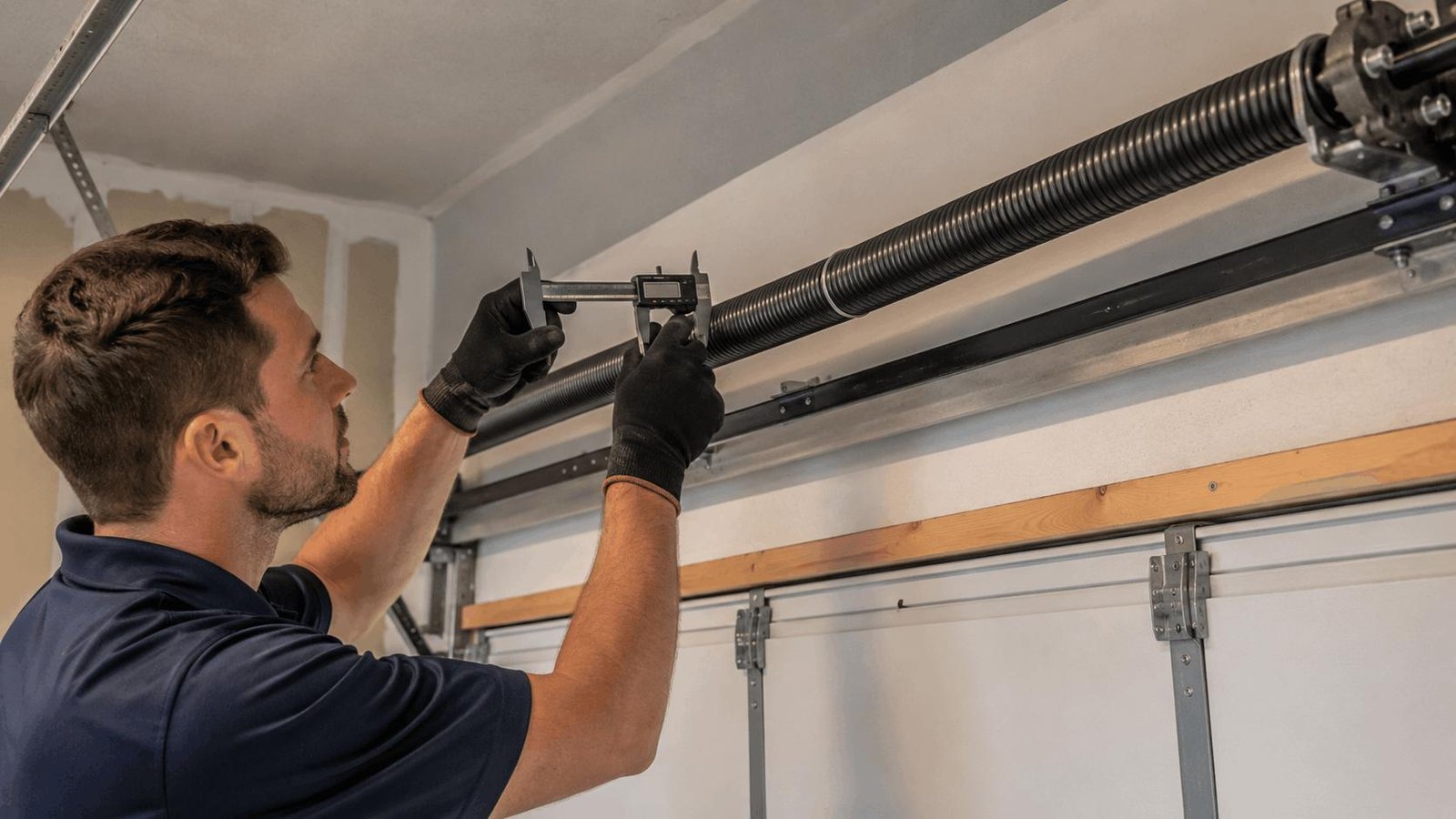
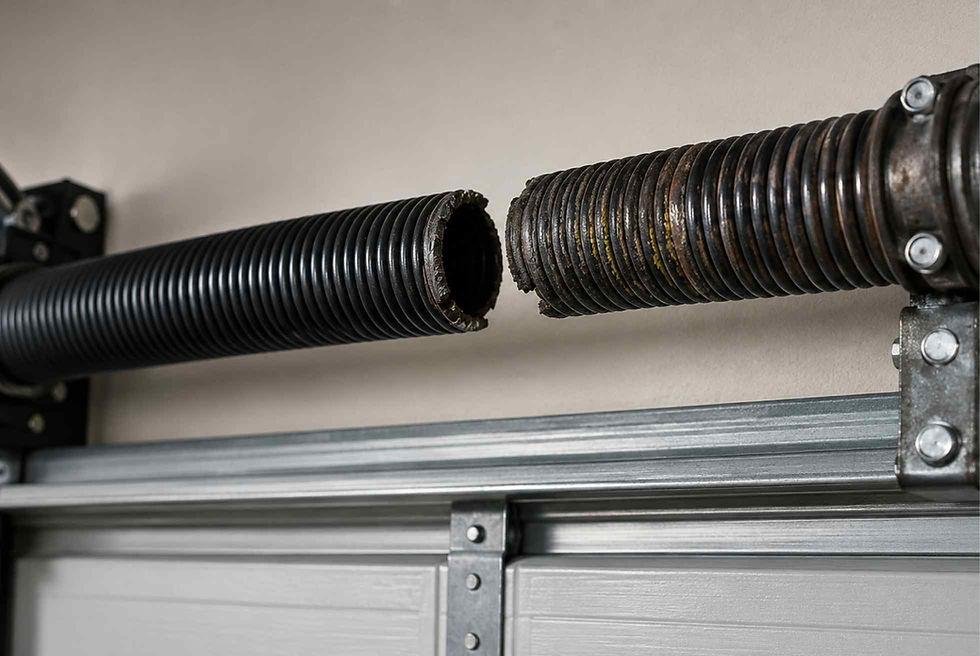
Garage door springs may look like simple metal components, but they perform an important job. They help counterbalance the weight of the garage door and make it possible for the door to move more easily.
If you are dealing with a broken spring, you may hear terms such as torsion spring and extension spring. But what is the difference between them?
Understanding the two systems can help you recognize what type of garage door spring your system uses and why professional spring service may be necessary.
What Are Garage Door Springs?
Garage door springs are part of the door’s counterbalance system.
A garage door can be heavy, and the springs help offset some of that weight. This allows the door to be raised and lowered more effectively, whether it is operated manually or with an automatic opener.
Two common types are:
- Torsion springs
- Extension springs
Although both perform a similar overall function, they work differently and are installed in different locations.
What Is a Torsion Spring?
A torsion spring is typically mounted above the garage door opening.
Instead of stretching out along the sides of the door, a torsion spring stores energy by twisting around a stationary shaft.
As the garage door moves, the spring’s tension changes to help counterbalance the door.
Where Is a Torsion Spring Located?
In many garage door systems, the torsion spring is located above the closed door.
Depending on the door design, there may be one or more springs working together as part of the counterbalance system.
Because the spring is under tension, it should not be adjusted or removed without the appropriate knowledge and equipment.
Signs of a Torsion Spring Problem
Potential signs include:
- The garage door will not open
- The door feels unusually heavy
- A visible gap appears in the spring
- The door becomes difficult to operate
- The door becomes unbalanced
- You hear a loud snapping or popping sound
If you notice these signs, a professional inspection can help determine whether the torsion spring needs repair or replacement.
What Is an Extension Spring?
Extension springs work differently.
They are typically installed along the sides of the garage door, near the horizontal tracks.
Rather than twisting around a shaft, extension springs stretch as the door moves.
They use that stored energy to assist with the movement and balance of the garage door.
Signs of an Extension Spring Problem
An extension spring issue may cause symptoms such as:
- Difficulty opening the garage door
- Uneven door movement
- A door that feels heavier than usual
- Visible damage to the spring
- Unusual movement or noise
- Problems with the door balance
A proper inspection is important because other garage door components can sometimes produce similar symptoms.
Torsion vs. Extension Springs
The main differences can be summarized simply:
| Feature | Torsion Spring | Extension Spring |
|---|---|---|
| Typical location | Above the garage door | Along the sides of the door |
| How it stores energy | Twisting | Stretching |
| Common application | Many modern garage doors | Various garage door systems |
| Service concern | High spring tension | High spring tension |
| Professional service | Recommended | Recommended |
The exact spring required depends on the garage door system.
Which Spring Is Better?
There is no single spring type that is automatically right for every garage door.
The appropriate system depends on the door’s design, weight, dimensions, hardware, and existing configuration.
If a spring needs to be replaced, it is important to identify the correct replacement rather than choosing a spring based only on appearance.
Why Correct Spring Selection Matters
A garage door spring needs to work with the weight and balance requirements of the door.
Using an incorrect spring can affect how the garage door operates.
A spring that does not properly match the system can contribute to poor balance, difficult operation, or additional wear on other components.
This is why spring replacement should begin with an assessment of the existing system.
Can You Replace a Garage Door Spring Yourself?
Garage door springs are not ordinary hardware.
They can store substantial mechanical energy. Removing, installing, or adjusting a spring incorrectly can result in serious injury or damage.
For this reason, spring replacement and adjustment are best handled by someone with the appropriate training, tools, and experience.
When Should Garage Door Springs Be Inspected?
You do not have to wait until a spring completely breaks before having it inspected.
Consider requesting an inspection if:
- The door has become harder to open
- The door is no longer balanced
- You notice unusual sounds
- The spring looks damaged
- The door moves unevenly
- You are concerned about the condition of the existing springs
An inspection can help identify spring-related problems before they become a larger inconvenience.
Garage Door Spring Service
Whether your garage door uses torsion springs or extension springs, the important thing is having the correct spring system properly assessed.
At Spring Garage Door Repair, we focus specifically on garage door spring services, including torsion spring replacement, extension spring replacement, broken spring repair, adjustments, and inspections.
If you are unsure which type of spring your garage door uses, you can request a call and discuss the symptoms you are experiencing.